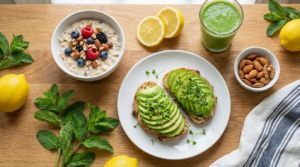


For long-term vitality, digestion is supported less by “perfect foods” and more by repeatable conditions. Food type matters, but timing often determines whether your body can use what you eat with steadiness.
Introduction
In simple terms, food type is what you eat, and food timing is when and how consistently you eat. Most people focus on type because it is visible and measurable. Timing is quieter, but it often shapes whether digestion feels predictable across demanding weeks.
This matters in modern life because many thoughtful, busy people eat “well” while living with irregular conditions: compressed lunches, late dinners, screen-meals, long gaps, and constant cognitive load. In that pattern, digestion can still function, but it often becomes more timing-sensitive, and the body has to compensate more often.
From a responsibility lens, the goal is not to decide whether timing or type is “more important” in theory. The goal is to notice what reliably stabilises your baseline in practice. Over decades, the body responds most to what repeats.
Traditional Chinese Medicine offers a parallel system map that can be used responsibly. Digestion is often discussed through the Spleen and Stomach systems (transformation, transport, steadier energy). Stress and emotional constraint that disrupt digestive smoothness are often mapped through the Liver system. Read this as a pacing reminder, not a diagnosis.
How This Affects the Body as a System
Digestion is not an isolated event in the stomach. It is a whole-system process influenced by rhythm, nervous system tone, sleep quality, and energy regulation.
| System link | How food timing influences digestion | How food type influences digestion | What serious readers track over time |
| Nervous system tone | Predictable meal windows reduce “guessing” and urgency, supporting calmer processing. | Very heavy, very stimulating, or highly processed meals can add internal noise, especially under stress. | Breath depth before meals, abdominal holding, post-meal calm |
| Appetite and signalling | Irregular timing can make hunger cues noisy, leading to rushed eating or overcorrection later. | Highly refined patterns can amplify swings in appetite and satisfaction. | Hunger predictability, cravings under pressure, steadiness after meals |
| Sleep and nightly repair | Late or inconsistent dinners can collide with downshifting, making sleep lighter and mornings less settled. | Rich or irritating meals near night can increase digestive “traffic” during sleep hours. | Sleep depth after ordinary dinners, morning appetite clarity |
| Energy and buffer capacity | Consistency tends to create steadier energy across the day, with fewer willpower-driven bridges. | Food quality supports energy stability, but only if digestion can reliably process it. | Afternoon crashes, reliance on stimulants, week-to-week buffer |
| Immune and boundary steadiness | Erratic timing can stress gut signalling and recovery cadence over months. | Food type influences gut environment and barrier steadiness, but impacts are harder to sustain without rhythm. | Frequency of “minor lingering irritation,” recovery after travel or busy weeks |
| TCM systems view | Regularity protects Spleen and Stomach steadiness, and reduces Liver-style disruption from rushed pace. | Food type can be supportive or burdensome, but its benefit is limited if timing and state are chaotic. | Stable appetite, stable digestion, stable recovery patterns |
A grounded framing that holds up is this: food type supplies the materials, food timing supplies the conditions. When conditions are unstable, even good materials are harder to use.
Common Modern Habits That Disrupt This Balance
These patterns are common in responsible lives. The value is recognition without self-criticism.
- Long gaps followed by heavy intake Skipped or delayed meals can lead to eating fast, eating late, or eating beyond comfort because the system is over-correcting.
- Late dinners as the default When dinner is pushed into the last part of the day, digestion competes with downshifting. Sleep may still be long, but maintenance often feels less complete.
- Screen-meals and work-meals Eating while answering messages or solving problems keeps attention in output mode, which often reduces pacing and digestive ease.
- Constant micro-stimulation between meals Caffeine, constant input, and relentless task switching can reduce the body’s ability to enter a calmer state where digestion completes cleanly.
- Treating food type as the primary lever Switching food rules repeatedly while meal timing stays irregular can create the feeling of “trying hard” without stabilising baseline.
Over time, the early pattern is often not pain. It is reduced predictability. Digestion becomes more sensitive to timing, pressure, and pace.
Gentle Ways to Support Balance Naturally
These are not treatments or protocols. They are repeatable conditions that make steadier digestion more likely. Consistency matters more than intensity.
- Stabilise one timing anchor first Choose one meal that happens in a broadly consistent window most days. For many people, stabilising the first half of the day prevents late-day compensation.
- Protect the downshift around meals Reduce inputs briefly before and during your main meal when possible. The purpose is not perfect mindfulness, it is lowering activation so digestion can proceed with less friction.
- Let food type become simpler during high-demand weeks When schedule and stress are high, choose meals that are easier to digest for you personally and avoid making eating another optimisation project. In a TCM responsibility lens, this protects Spleen and Stomach steadiness.
- Use timing to reveal what food type actually does When meal timing is steady for a few weeks, patterns become clearer. You can then observe which meal qualities reliably support or disrupt your baseline without guessing.
- Track one marker of digestive steadiness Examples: post-meal comfort, appetite predictability, timing sensitivity, or regularity across busy weeks. Tracking is a responsibility practice because it prompts smaller corrections earlier.
A practical takeaway: if digestion is unstable, prioritise timing and pace first. Once rhythm is steadier, food type decisions become more accurate and less reactive.
Closing Reflection
Food type matters for long-term gut health, but food timing often determines whether digestion can stay steady under real life pressure. For serious readers, the goal is not perfect eating. The goal is a rhythm your body can rely on, so nourishment becomes predictable and recovery stays routine.
Related areas that pair naturally with this lens include sleep rhythm, stress tone around meals, and recovery capacity as a long-term metric.
Check Out Huiji Products ->