





For long-term vitality, sleep is not only a number of hours. It is whether your nights reliably complete maintenance, so your baseline stays steady across demanding years.
Introduction
In simple terms, sleep quantity is how long you sleep, and sleep quality is how completely your body downshifts into repair. Quantity is easier to measure. Quality is easier to feel the next day through clarity, digestion steadiness, and emotional buffer.
This matters in modern life because many thoughtful, busy people protect sleep hours while unintentionally eroding sleep quality. Bedtimes drift, evenings stay mentally active, and “rest” is often filled with input. In that pattern, sleep becomes a long pause that still does not fully restore baseline.
From a responsibility lens, sleep is not only recovery from exhaustion. It is the body’s daily opportunity to complete routine work that prevents drift. In Traditional Chinese Medicine (TCM), this is often framed as protecting yin time for inward restoration. Sleep quality is commonly related to Heart and Shen settling (ease of rest), supported by smooth regulation through the Liver system, steady nourishment through the Spleen system, and long-view reserves through the Kidney system. Used responsibly, these are not diagnoses. They are system maps that encourage earlier, smaller adjustments.
How This Affects the Body as a System
When sleep quality is consistently low, the body can still function, but it often functions with more friction. The most useful way to understand this is through coordination between systems.
| System area | What sleep quantity helps with | What sleep quality changes most | What serious readers track over time |
| Nervous system tone | Basic fatigue reduction | Whether the system truly settles out of alert mode | Ease of calming, baseline jaw and shoulder tension |
| Digestion and appetite rhythm | More stable energy to eat and function | More stable gut signalling and less “timing sensitivity” | Appetite steadiness, comfort after ordinary meals |
| Energy and buffer capacity | Fewer overt crashes | More margin and less reliance on willpower | Buffer across the week, bounce-back after late days |
| Immunity and repair coordination | Some replenishment | Cleaner recovery cycles, fewer lingering “minor irritations” | Recovery speed across months, not single incidents |
| Mood and regulation | Less irritability from sleep loss | Smoother emotional transitions and less reactivity | Patience, mental clarity, morning baseline |
| TCM systems view | More rest time | More complete yin restoration, calmer Shen, steadier reserves | Stable sleep depth, stable digestion, stable recovery |
A grounded definition that holds up is this: quantity reduces sleep debt, quality reduces recovery debt. Over decades, recovery debt is often what quietly accumulates.
Common Modern Habits That Disrupt This Balance
These patterns are common in responsible, high-functioning lives. The value is recognition, not self-criticism.
- Protecting hours while letting timing drift Sleep starts and ends at different times across the week. The body gets hours, but loses rhythm cues that support deeper maintenance.
- Evening stimulation that continues past “work” Late messaging, decision-making, and rapid content keep the nervous system in problem-solving mode, even when you are physically tired.
- Rest that still contains input Breaks filled with scrolling, news, and background audio reduce felt fatigue while keeping activation high. This often pushes restoration into a narrower window at night.
- Meals and sleep competing for the same late window Late dinners, rushed eating, or eating while working can keep digestion active when the system needs to downshift.
- All-or-nothing recovery Under-recovery during the week, followed by a weekend “catch-up,” can preserve function while making restoration less predictable.
Over time, these habits often produce a recognizable pattern: sleep can be long enough, but lighter, with more busy dreaming, more sensitivity to stimulation, and less morning baseline.
Gentle Ways to Support Balance Naturally
These are not treatments or protocols. They are repeatable conditions that make deeper rest more likely. Consistency matters more than intensity.
- Treat one timing anchor as non-negotiable A stable wake time, or a stable bedtime window, reduces internal uncertainty. This is often the simplest way to support quality without doing more.
- Build a short closing signal before sleep Choose a low-input transition that repeats, such as tidying one surface, writing tomorrow’s first step, then stepping away from screens. The purpose is closure, not productivity.
- Separate “stopping” from “settling” Ending work is not the same as entering maintenance. A brief quiet period helps the nervous system register safety and completion.
- Protect digestion as part of sleep quality Aim for calmer pacing at dinner and broadly consistent timing. This supports steadier internal conditions, which often makes settling easier.
- Track one quality marker, not a long checklist Pick a simple signal such as time-to-settle, sleep depth, morning baseline, or jaw tension at rest. Tracking supports responsibility because it prompts smaller corrections earlier.
In a TCM responsibility lens, these habits protect yin time, support the Heart and Shen’s ability to settle, reduce Liver-style constraint from unresolved activation, and protect longer-term reserves associated with the Kidney system.
Closing Reflection
Sleep quantity helps you avoid overt depletion. Sleep quality determines whether nightly maintenance reliably completes. For serious readers, the goal is not perfect sleep. The goal is a stable rhythm where downshifting is common enough that recovery stays routine.
A prevention-minded approach stays calm and structural. Protect one anchor, reduce avoidable stimulation near night, and notice early drift in baseline. Related topics that pair naturally with this lens include nervous system regulation, digestion under pressure, and reco
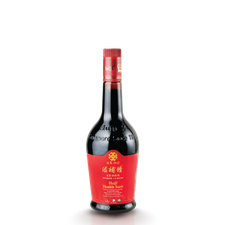
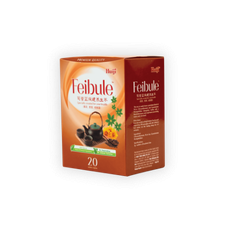
Check out HUIJI Products to help enhancing your sleep qualities! ->